

Leaders plan. Teams execute. Right?
Plan with your team, not for them.


I’m in charge—follow me!
There’s some truth to this.
I mean, how will my team know how brilliant I am if I don’t tell them what to do? (Sigh).
But I don’t always have the answers. And asking a quick “everyone good with this?” doesn’t count as getting real input.
Collaborating was hard for me as a new leader. I wanted my team to trust that I had it all together. That I knew what I was doing. I had a plan!
I mean, of course I want my team to help do the work.
Leaders don’t have to do all the things, they just need to make sure they get done.
Got it. Makes sense.
But what about in planning? How often do we include our team in developing the plan before we execute it?


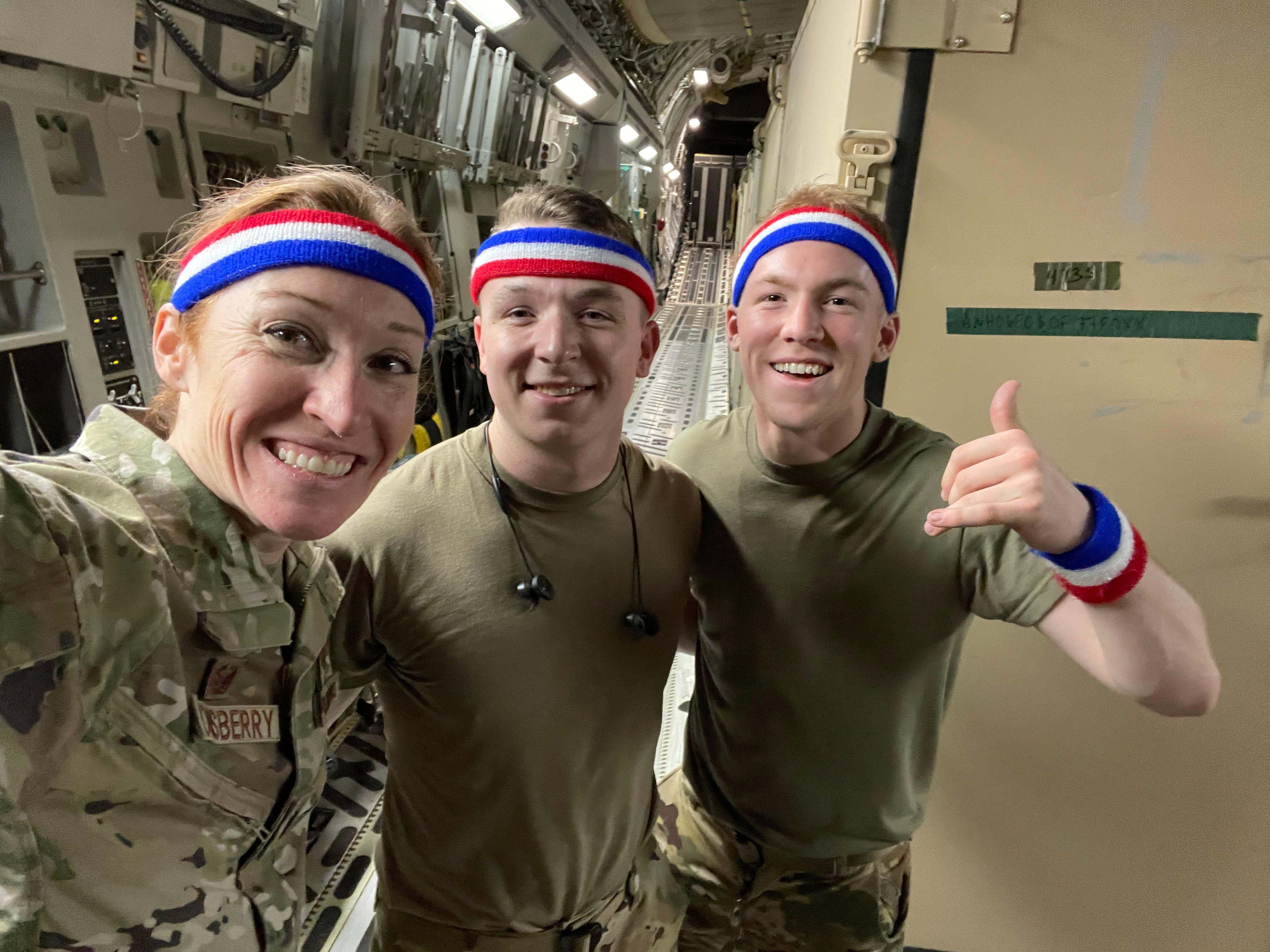
When a C-17 crew flies a mission, they don’t just show up and take off. Depending on the mission, the pilots and loadmasters will have spent hours (and often days) planning the mission together.
Some parts are done separately by crew position.
The loadmasters don’t care too much what route the pilots plan to fly as long as it stays clear of terrain and the turbulence doesn’t scare any passengers (or disrupt their Euchre game if we’re flying back home empty).
I as a pilot would never tell the loadmasters how to fit a helicopter in next to the Humvee, but I trust and appreciate that they have a solid plan so we don’t tip over.
The pilot designated as the Aircraft Commander (AC) leads the effort and is the final authority on the entire plan. But would they ever do all the planning? Absolutely not.
Not only does the AC lack the experience, perspective, bandwidth, and time, it would be a detriment to all the benefits the team gets from doing the planning together.


Planning together is good for you
If this sounds sarcastic, like me telling my kids “doing the dishes is good for you,” I really do mean it. Planning together is good for you!
And my kids doing the dishes is good for me, which therefore somehow makes it good for them. Trickle-down economics or something.
Look, I promise—planning is not a meaningless chore.
When planning at “ground speed zero,” so much is happening.
As the team plans out their mission, whether it’s to fly or manage issues in an office environment, they can identify and solve problems before they happen.
People understand their roles, but don’t fill them in isolation.
They discuss the challenging parts.
They ask questions about things they haven’t done before.
Experienced team members have time to teach the newer folks the ropes.
The team builds communication, trust, and camaraderie, and they have a stronger understanding of the mission because they helped develop it.
When you plan together, you don’t just get a better plan. You get a better team.
You’re still in charge
You’ve either built your organization from the ground up or been entrusted by someone else to lead it, so don’t give up that authority or burden.
As much as I love America (Happy Birthday!) I’m not saying you should lead your team as a complete democracy (unless you’re leading a democracy).
You also don’t need to run it as strict as the military (unless you’re in the military).
But whatever your style, your team should always trust that their leader will lead.
Always set the mission, vision, and priorities for your organization.
The Air Force doesn’t hand us a C-17 and say “go do something good for America!” They give us a specific mission and let us plan the details that work best for our conditions and team.
I’d never put all my kids in the car, start driving and ask “where do y’all want to go for vacation?”
My husband and I may ask for inputs on picking a destination (before putting them in the car). But we’ll decide the mission, vision, and priorities for our trip. And no we don’t actually call it that, but I may or may not use my whiteboard to brainstorm which Buccee’s we’ll stop at first…
Collaborate Early and Often
How can you include your team with planning so they are more aligned for execution?
It doesn’t have to be complicated or formal, though some problems might require it.
A few ideas to try:
Ask your mid-level leaders specific questions, like “What’s the biggest challenge for your team,” or “How would you spend $1000 in your office?”
Include team members for long-term planning with off-sites or workshops. These build relationships while developing the way ahead.
If a new problem pops up, rally a small group to work it together instead of guessing how your solution will affect your team. They can help you solve it!
Set your mission, vision, and priorities.
Then plan with your team, not for them.
American Debrief
“We hold these truths to be self-evident, that all men are created equal, that they are endowed by their Creator with certain unalienable Rights, that among these are Life, Liberty and the pursuit of Happiness.” - Declaration of Independence
We are far from perfect. We have some work to do. But no matter the politics, I believe we’re still a nation full of people who care about each other.
Birthdays are often a time to reflect on how far we’ve come, but also where we want to go. I think we as a nation could benefit from some reflection. We’re definitely better together, because of our differences, not in spite of them. Keep talking to people, even (especially) those you disagree with. Respectfully, of course.
Good is often quieter than evil. It doesn’t get as many clicks. It doesn’t boast.
I remain optimistic because of all the good I see.
I promise if you look around you’ll see it too.
Happy 250th Birthday, America!
Sunny Skies,
Susie ☀️🇺🇸