

The Panic Button Worked. Now What?
What flight crews know about handling emergencies together

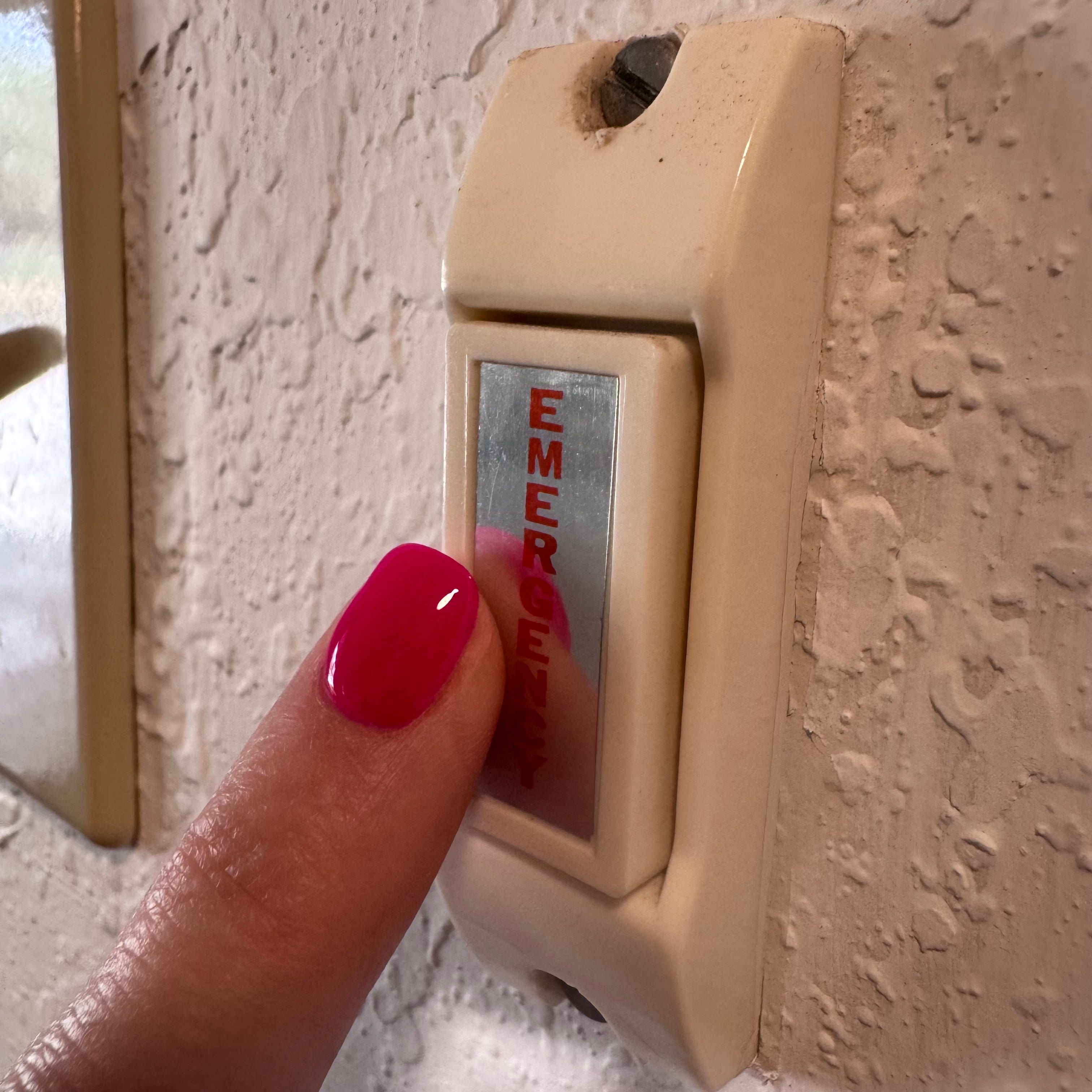
“What’s this button do?” my son’s friend asked, pointing to the disconnected panic button in the entryway of our house.
“Nothing,” I said. “Go ahead and press it.”
I’m not sure whose eyes got bigger, his or mine, when the siren started screaming from the attic.
We had lived in this house, the house my Granddaddy built, for over three years, and had pressed that button before to see what it did. It did not work!
Except now it did. And I had no idea how to un-panic it because pressing it again to stop it was as futile as trying to make an elevator show up faster.
There was no company to call or website to reference because there was no account. Because IT DID NOT WORK.
Dogs are barking. Kids are scared they’re going to be in trouble if the police show up. I’m wondering if I should preemptively call 911 to wave them off while I tell the boys everything is fine but have no idea what to do.
And there is a legit Texas thunderstorm with hail arriving any minute. I thought, maybe the neighbors will think it’s a tornado siren and not notice us. 🫣
Now what?
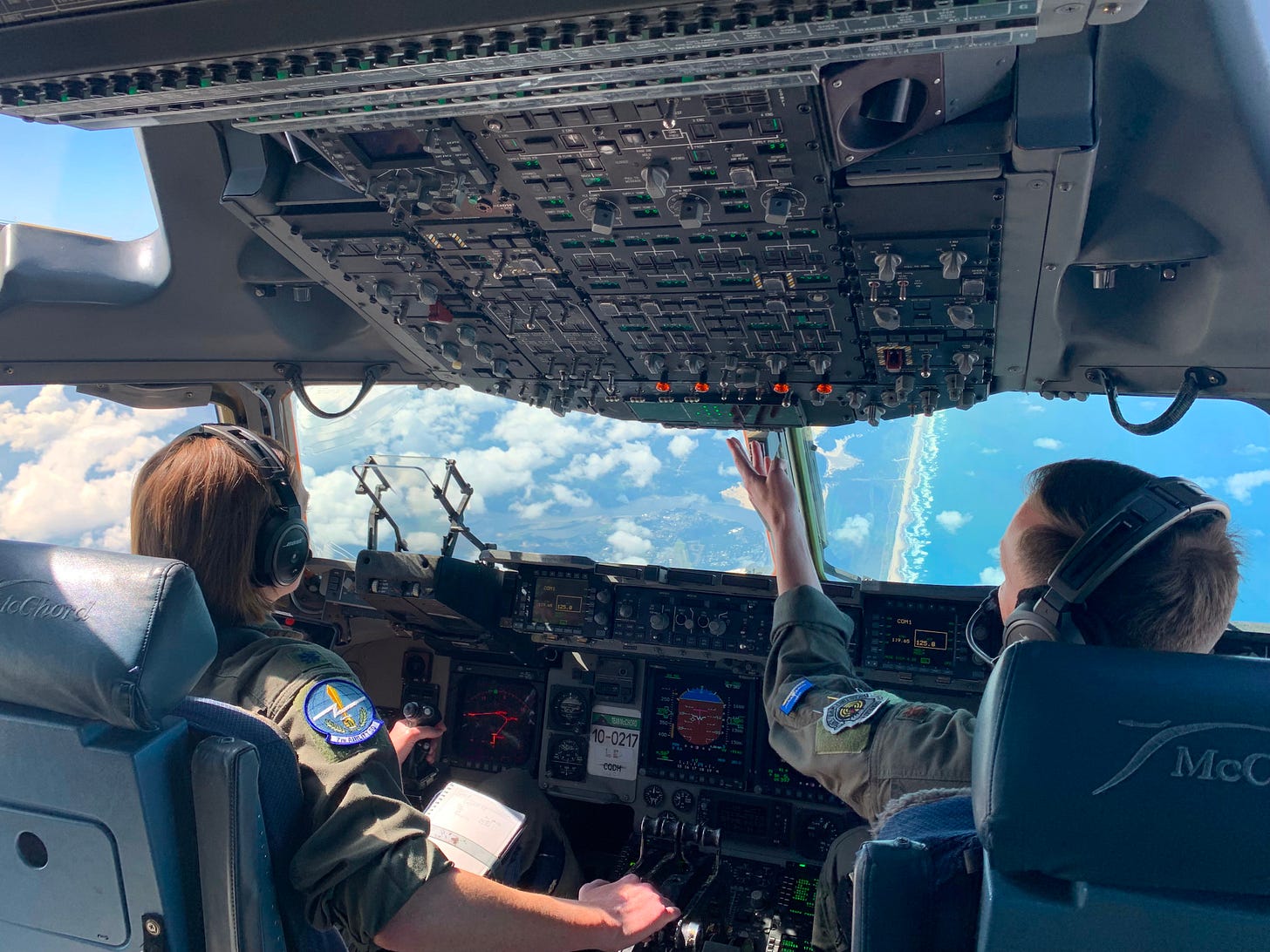
How Flight Crews Handle Emergencies Together
You’ve been there, right?
Whether you pressed a button, someone else pressed a button, or a thing just happened, you were pleasantly poking along, enjoying your day, when everything flips upside down and you have to solve it NOW.
Maybe the problem is screaming at you. Maybe it’s peeking around the corner and you caught it before it got too bad. Either way, it’s yours now until you fix it. Then you can get back to whatever it is you’d rather be doing.
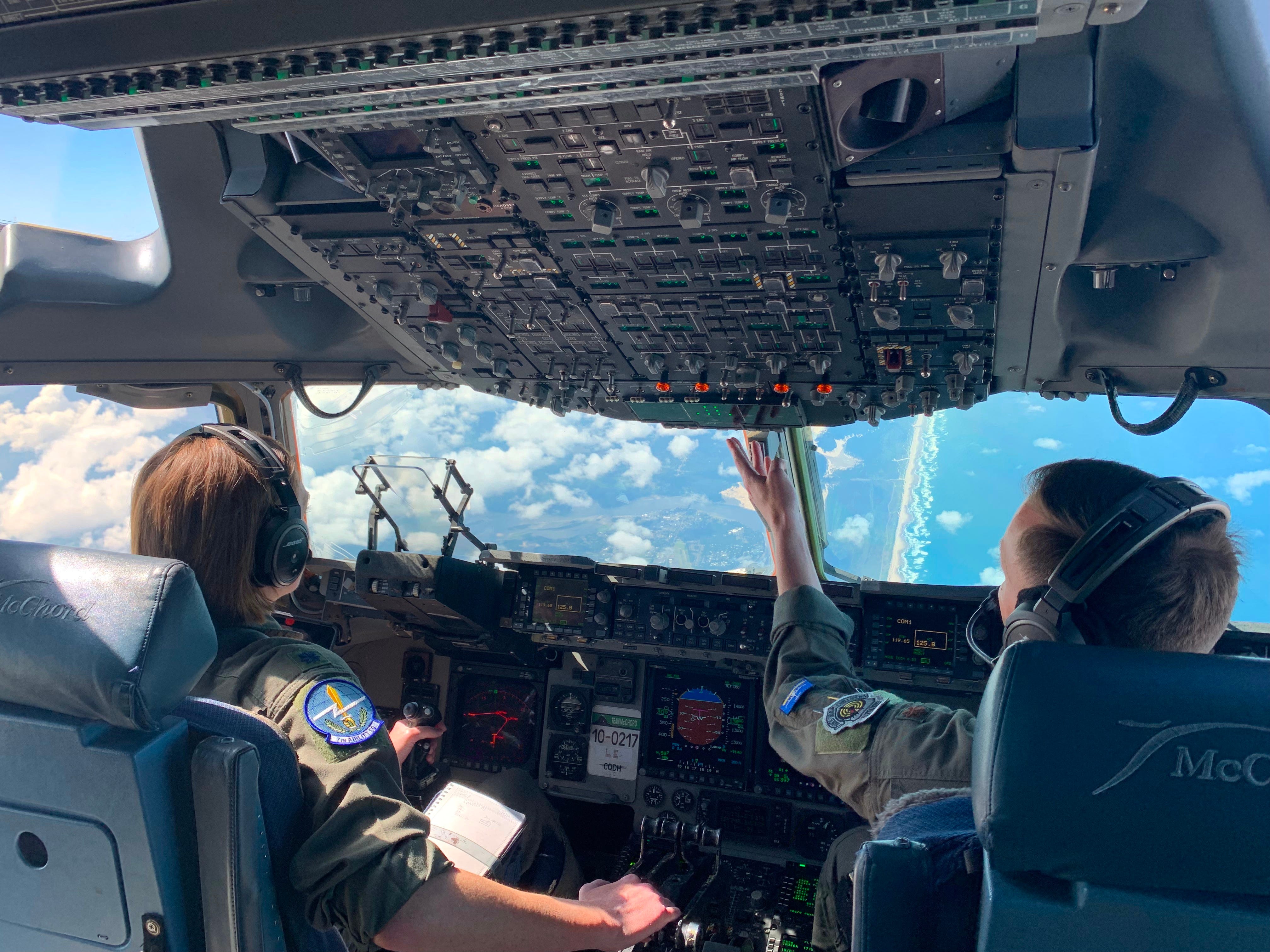
In military aviation we almost expect to have problems. Rarely full-blown emergencies, but malfunctions, contingencies, things that require us to adapt when they don’t go as planned… these are the norm. So we train for them.
And with any emergency, big or small, we work methodically as a crew to resolve it. Ask any Air Force pilot and they’ll tell you the basics:
Maintain aircraft control
Analyze the situation
Take appropriate action
Land as soon as conditions permit
This button turned off the alarm like it’s meant to. Good job.
Maintain Aircraft Control
What can you not ignore while you work the problem? Maybe an important client is showing up, or there’s a deadline you can’t miss. Most things can probably wait.
Have a copilot “fly” to keep critical things moving forward.
Remember, the leader doesn’t need to do everything, they just need to make sure it gets done. Use this chance to delegate to your team members in new ways. Look at you, making room for training opportunities and growth!
Analyze the Situation
Take some time to really understand what’s going on. Albert Einstein said “If I had an hour to solve a problem I’d spend 55 minutes thinking about the problem and 5 minutes thinking about solutions.”
Your first assumptions about what is wrong may be, well, wrong. Once the aircraft is stable, go check it out. Bring other crew members for more perspectives and experience as you dig into the issues.
Get as much info as you can and figure out the root problem you need to solve.

Take Appropriate Action
You’ll never have it all figured out before it’s time to move out. Come up with a plan, but don’t let perfection or fear of failure keep you from acting.
Think big to small: big steps first, then work out details as time permits.
It’s normal (and good) to continue analyzing and updating the plan as you go. And check on the copilot to make sure they’re still doing a good job.
Just remember: your team is your greatest resource, but the decision to go is yours.
Ask for inputs. Discuss options with your people. But never put the burden of leadership on your team’s shoulders.
Land as soon as conditions permit
We can’t pull over to the side of the road if we have a problem while airborne. Depending on the emergency, we may need to find a safe place to land.
Not every problem you face will put you in the danger zone. But keep an eye on your team. If you’ve been pushing through challenges and operating at or near capacity for a while, it may be time to land.
This could be as simple as letting people go early on a Friday, or delaying a recurring report that could wait a week. What do your conditions drive or permit?
Give people a chance to rest and reset. Then on to the next mission.

Panic Button Debrief
You may be wondering, is the alarm still going off? I’m happy to report our family crew worked the problem together and did not have to move. Through (mostly) calm thinking and analysis, limited bad words, teamwork (yay Jason!), and strategic wire cutter application in the attic, that alarm will never go off again.
It still made my heart rate go up when I took the picture of my finger near the button. Because… you never know.
After all, you can’t predict every problem.
But you can teach your team to solve them better, together.
Quick Collab
If this resonated, I’d greatly appreciate a 💛 or a share to help others find it.
And if you have a moment, what’s your take on the question below? ⬇️
Sunny and Safe Skies,
Susie ☀️
Susie, I enjoyed the story of the panic button incident as well as the important points about working together as a team and not delaying action to the point of analysis paralysis.
Reminds me of the time my then 3 year old pressed the fire alarm button at our local library. We got kicked out as the library had to be shut because the librarians didn't know how to turn off the alarm. We didn't go back for a couple of months 😂 And when we did I brought chocolates as an apology!